One Figure, Walking Away
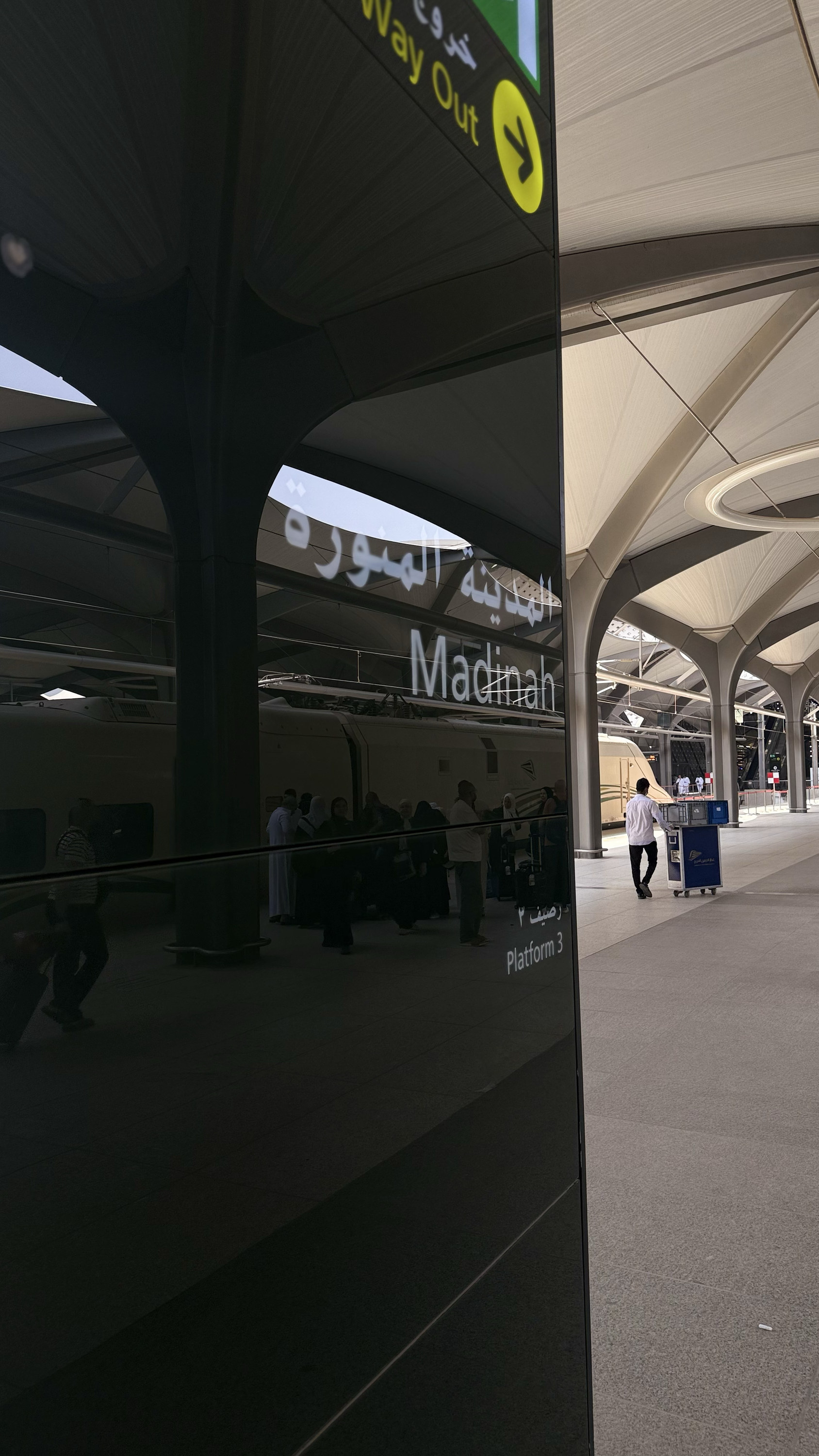
At the end of a bright platform, one man pushes a cart away from the camera. The station is nearly empty, the crowd is a reflection in the black glass beside him, and he is leaving the frame without ever having turned around. He is the last figure in this volume, and like all the others, faceless.
It would have taken nothing to photograph him differently. A word, and he turns; a face appears; the picture becomes a portrait of a particular porter at Madinah on a particular afternoon. And something would be lost in the exchange. Named and faced, he becomes one man. Kept walking away, he stays every man who has ever done quiet work at the edge of somewhere sacred.
This has been the argument of the whole volume, made six times over. The hand instead of the man. The back instead of the face. The shadow, the crowd, the silhouette. Each refuses the same thing for the same reason: a face closes a photograph down to a single person, and the archive keeps trying to leave it open.
None of this is a rule against faces. There are photographs, rare ones, that need a face and are hollow without it, and knowing which is which is most of the craft. But the instinct here runs the other way, toward the figure who could be anyone, because a stranger you cannot name is a stranger you can imagine being.
He walks away, and by not showing us his face, he lets us keep our own.